
Longevity Are Key Features of Flexible PCBs
With the ability to bend and fold, a flexible circuit board offers more design options than rigid PCBs. This flexibility allows the circuit board to adapt to the environment it is in, reducing stress on the components and allowing for easier handling. It is ideal for environments with a lot of movement, such as wearable devices that will be moving with the user.
These circuit boards are often made from polyimide and polyester. These materials are renowned for their durability and strength, combining the essential qualities of flexibility and longevity. These materials are also very thin, which helps to keep the board lightweight and reduce its footprint. The thickness also enables the board to bend and fit into complex shapes without snagging or catching on other parts of the device.
The layered structure of a flexible circuit board consists of a substrate layer, conductive metal layer, solder mask, and silk screen. These materials are used to protect the underlying copper and provide electrical connections. They are also a crucial part of the circuit’s structural integrity, protecting it against environmental conditions and mechanical damage.
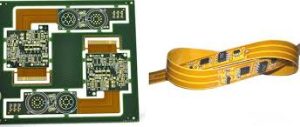
Flexibility and Longevity Are Key Features of Flexible PCBs
To ensure the longevity of a Flexible PCB, it is important to follow the appropriate rules when designing. For example, it is recommended to use ED copper in static applications and Rolled Annealed (RA) copper for dynamic flexing. RA copper is more durable and can withstand higher levels of flexing without becoming rigid or damaging the circuit board.
Another important rule to follow is the density priority principle. This means starting with the highest density components and working down to lower-density ones. This will help to avoid signal delays, signal reflections, and impedance problems.
In addition to these rules, it is vital to follow the layered design and stack-up principles that are exclusive to flex circuits. This is to prevent damage and unforeseen malfunctions during the fabrication process. In addition, it is important to use proper etching techniques and be mindful of the thickness of the copper layers.
Using these rules can help to make the manufacturing process more efficient, and it can also reduce the amount of waste produced by the process. This will ultimately decrease the cost of a flexible circuit board and lead to more affordable products for consumers. Moreover, a well-designed flexible circuit will perform better than one that isn’t properly designed. For this reason, it is important to work with a reputable manufacturer who understands these rules and can produce high-quality, reliable boards.
Besides, the manufacturer should offer a range of quality control processes to ensure that the finished product meets all specifications and is free from contaminants. These processes include visual examination and counting of the individual circuit boards to confirm their correct number. This will help to prevent errors during the assembly process and to reduce the overall time and cost of production. Lastly, the manufacturer should also have a service loop to ensure that the flex circuit boards are available for inspection and maintenance after installation in the customer’s device.